


UTI/Urosepsis

RECCE® 327 I.V.
RECCE® 327 (R327) was developed beginning with the end in mind, being entirely synthesised to capture and enhance unique mechanisms of action, able to overcome deadly bacterial infections, including the full suite of ESKAPE pathogens, even in their multi-drug resistant forms.

Overview
A urine culture can confirm the presence of bacteria in the urine and the infection, sometimes indicating the best antibiotic to start treatment. Most patients, roughly 60%, will begin to feel better within a week with the first course of antibiotics. However, several rounds of treatment may be needed for those with recurrent or complicated UTIs, or the infection can spread into the bloodstream, leading to sepsis. Sepsis that results from UTIs is referred to as urosepsis. In general, 30% of sepsis cases originate from the urogenital tract.
UTI Cases and Fatalities by Geographical Area
Worldwide
Cases
400 million
200,000
deaths in 2019
USA
50-60%
of the women in the USA will develop a UTI at some point in their lifetime
Europe
Over
4.3 million
patients acquired healthcare-associated UTIs annually
Australia
Cases
250,000
annually
UTI Patient Journey
- Urinary Tract Infection (UTI) is one of the most common infectious diseases
- The most common pathogen causing UTIs is Escherichia coli (E. coli) with 62%
- One in three uncomplicated UTIs in young healthy women are Bactrim-resistant
- One in five are resistant to five other common antibiotics.
- Antibiotic effectiveness against common UTI pathogens has declined significantly in recent years.


Clinical Trial Complete
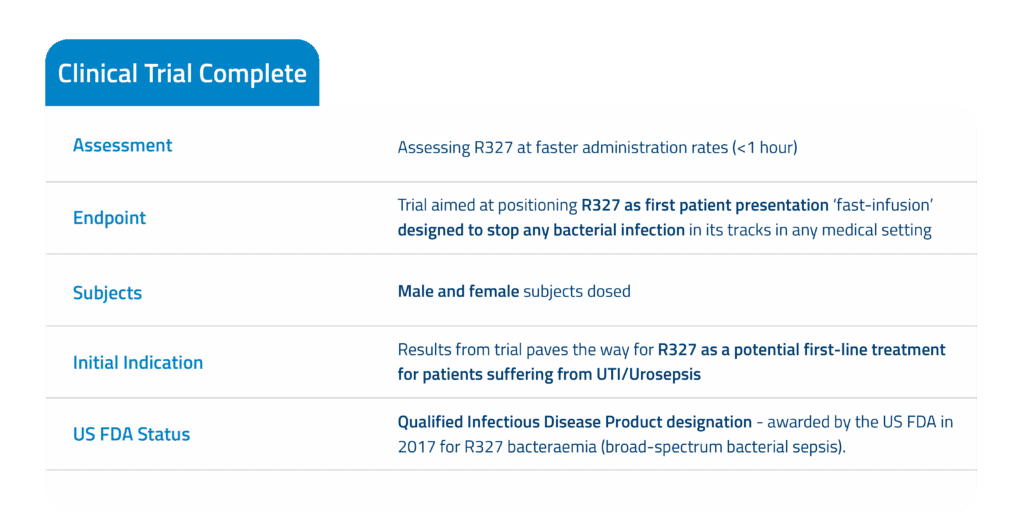
Following the successful completion of its Phase I and Phase I/II clinical trials, Recce Pharmaceuticals continues to advance the development of RECCE® 327 (R327) in intravenous (I.V.) formulation for the treatment of urinary tract infections (UTIs) and urosepsis, a serious and often life-threatening complication.
The Phase I trial in more than 60 healthy participants demonstrated demonstrated that R327 was safe and well tolerated at escalating doses up to 6,000 mg delivered via 1-hour infusion, with no serious adverse events reported. Pharmacokinetic analyses confirmed that R327 concentrates in the urinary tract, with urine levels up to 20 times higher than plasma, supporting its application as a targeted therapy for urinary pathogens.
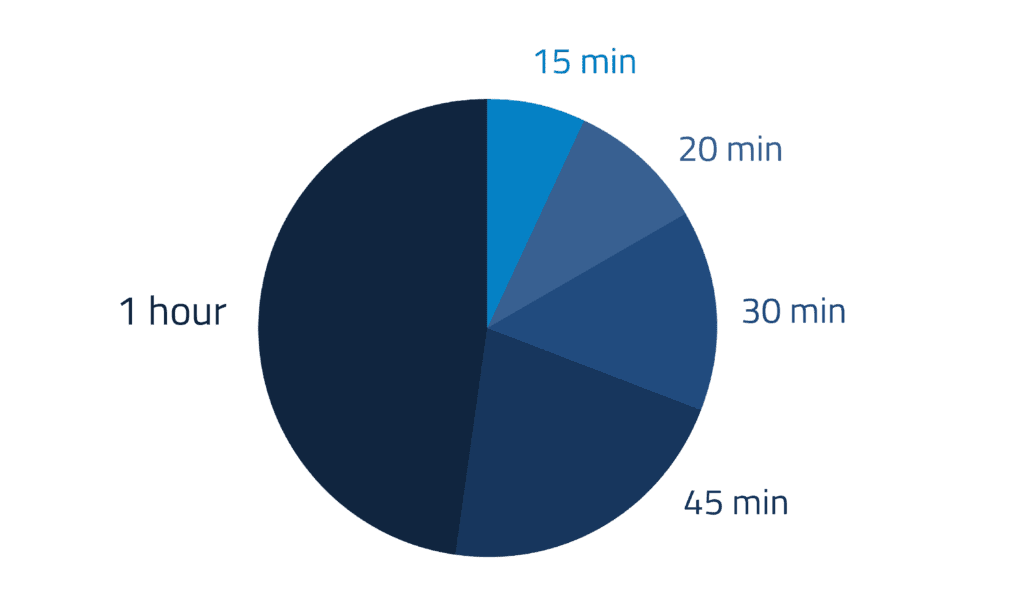
The subsequent Phase I/II trial assessed faster administration, achieving infusion times as short as 15 minutes, supporting R327’s potential as a first-line ‘fast-infusion’ treatment. In laboratory testing, R327 in human urine achieved a 6-log reduction in E. coli within minutes, and bacteria could not be revived after treatment.
About RECCE® 327
In laboratory testing, R327 retained its activity through more than 25 repeat exposures with no sign of resistance, whereas amoxicillin lost activity within eight.
As an IV therapy, R327 is being developed for a broad range of bacterial infections, including UTI/urosepsis and sepsis. It holds QIDP designation from the U.S. FDA.